ACL Tear & Knee Ligament Injury: Symptoms, Diagnosis & Reconstruction Guide
The Anterior Cruciate Ligament (ACL) is the primary rotational stabilizer of the knee. Tears commonly happen during football, cricket, badminton, or motorcycle mishaps. Prompt clinical assessment ensures secondary meniscus tears are avoided.
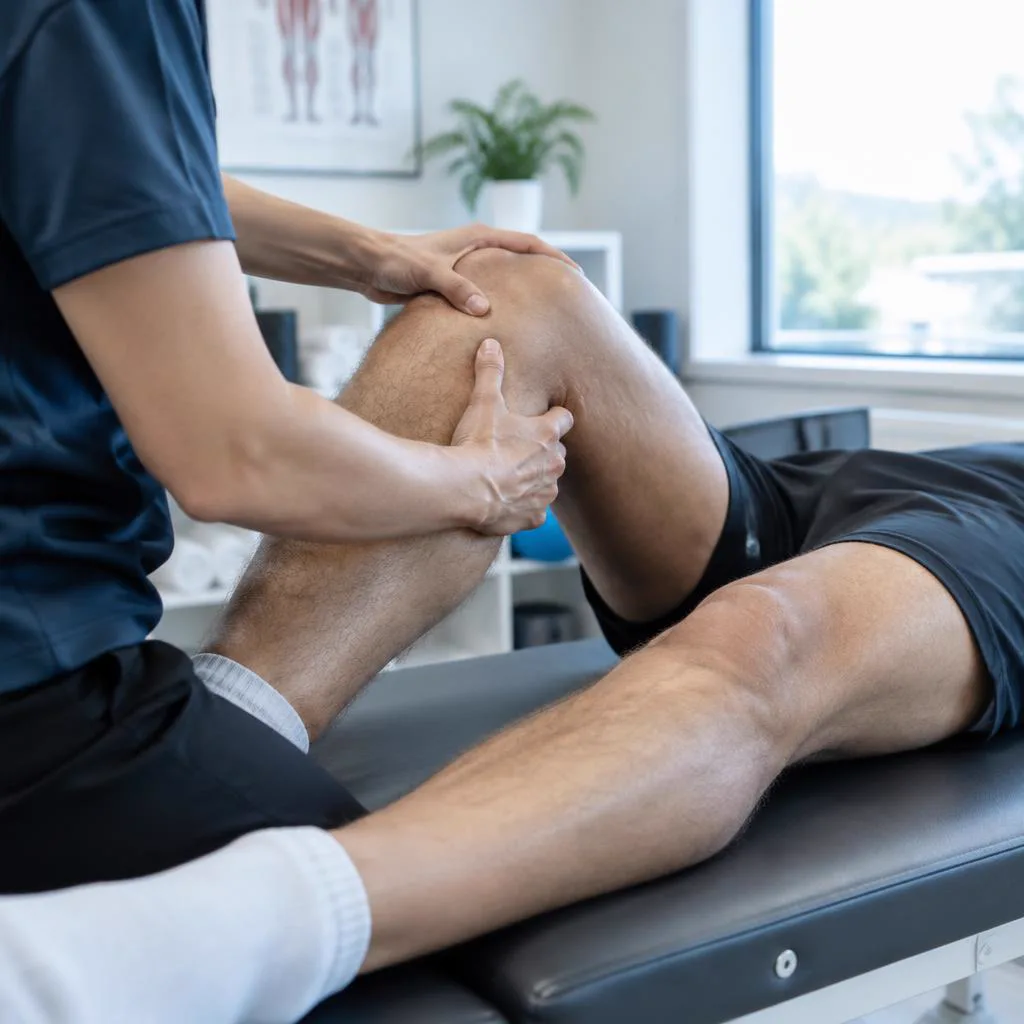
In-Clinic Clinical Evaluation
Hands-on Joint Check • Digital X-Ray on Site • Clear Care Pathway
Understanding ACL & Knee Ligament Tears
Orthopaedic pain is often misunderstood. Patients experiencing joint stiffness, catching, or radiating back discomfort frequently fear immediate major surgery. In clinical practice at Leela Health Care, our philosophy is anchored in clear diagnosis, patient education, and exhausting non-surgical therapies before any surgical pathway is contemplated.
What You Feel: Typical Signs & Sensations
Symptoms often start subtly before progressing. Recognizing these early signs helps prevent compensatory strain on adjacent joints.
- A distinct 'pop' sound or physical snapping sensation inside the joint at the exact moment of injury
- Rapid joint swelling (hemarthrosis) developing within 2 to 4 hours due to intra-articular bleeding
- Knee feeling unstable, loose, or 'giving way' when attempting to pivot, turn, or bear full weight
- Inability to fully extend (straighten) or bend the knee due to swelling and protective muscle spasm
- Deep, throbbing ache settling into a persistent soreness around the joint line when resting
Why It Happens: Joint & Tissue Mechanics
Joint and spine discomfort is rarely caused by a single isolated event; it usually reflects mechanical load, tissue wear, historic trauma, or postural stress.
Sudden deceleration while changing direction or cutting during football, basketball, or badminton
Awkward landing from a jump with the knee collapsed slightly inward (valgus stress)
Direct traumatic impact to the outer side of the knee during sports collisions or road accidents
Hyperextension force applied to a planted foot
Clinical Diagnosis & Joint Examination at Leela Health Care
Accurate diagnosis requires direct clinical palpation, joint stress testing, and targeted imaging reviewed with you in the consultation room.
Clinical Ligament Stability Testing
Our orthopaedic team conducts precise manual stress tests (including the Lachman, Anterior Drawer, and Pivot-Shift maneuvers) to measure anterior tibial translation and rotational laxity compared with the uninjured knee.
In-Clinic Digital Radiography
Prompt multi-angle X-rays to rule out associated tibial spine avulsion fractures, Segond fractures (lateral capsule avulsion), or acute bony trauma.
High-Resolution MRI Evaluation
Definitively confirms tear grade (partial vs complete) and assesses accompanying meniscus tears, collateral ligament strains, and bone bruising.
Conservative-First Care: What You Can Do First
We prioritize non-invasive measures. For most patients, disciplined early care restores function without surgical intervention.
Immediate Acute Management (POLICE Principle)
Protection, optimal gentle loading, ice therapy, compression wraps, and elevation to control initial hemarthrosis and pain.
Functional Knee Bracing
Hinged knee brace support to protect the healing joint from accidental rotational twisting during early daily walking.
Dedicated Prehabilitation Physical Therapy
Restoring full knee extension, reducing swelling, and actively firing the quadriceps before making surgical decisions.
When Conservative Care Is Not Enough
Surgery is never a first choice, but delaying necessary intervention when structural criteria are met can cause secondary damage. Here is when our clinical specialists recommend evaluating surgical options:
Recurrent Knee Buckling or Giving Way
Repeated episodes of instability during daily walking or simple turning that threaten cartilage and meniscus health.
Concurrent Meniscus or Multiligament Injury
Combined injuries where restoring mechanical stability is essential to protect a repairable meniscus tear.
Desire to Return to Pivoting & Cutting Sports
Athletes and active individuals intending to play football, badminton, basketball, or cricket requiring rotational security.
Treatment Pathways at Leela Health Care
While some partial tears and low-demand lifestyles can be managed with rigorous hamstring and quadriceps strengthening, an unstable knee puts you at high risk of rapid secondary cartilage tears. When clinical laxity or athletic goals require anatomical stabilization, our surgical team provides minimally invasive care through our ACL Ligament Reconstruction pathway.
ACL Ligament Reconstruction
Minimally invasive keyhole anatomical ligament reconstruction using your own tendon autograft, returning you safely to sports and active daily life.
Common Questions About ACL & Knee Ligament Tears
Clear, direct answers to what patients frequently ask during their consultation at our Banashankari clinic.
Book an appointment
Fill in your details and Dr. Prajwal's clinic team will confirm your consultation slot by phone or WhatsApp.
Clinic Address
7th Block, 4th Phase, 2/Y 6th Main, 100 Ft Road, opposite Popular Bajaj, Banashankari 3rd Stage, Bangalore 560085
Mon–Sat: 10:00 AM – 9:00 PM · Sunday: Closed