Skip to content

Joint Replacement Surgery in Banashankari, Bangalore

Joint replacement surgery restores joint function and eliminates debilitating pain by replacing worn or collapsed articular surfaces with precision-engineered prostheses. Whether addressing hip avascular necrosis or multi-joint arthritis, our focus is on muscle-sparing care, restoring natural joint movement, and helping you walk independently again.

Non-surgical care first•100 Feet Rd, Banashankari
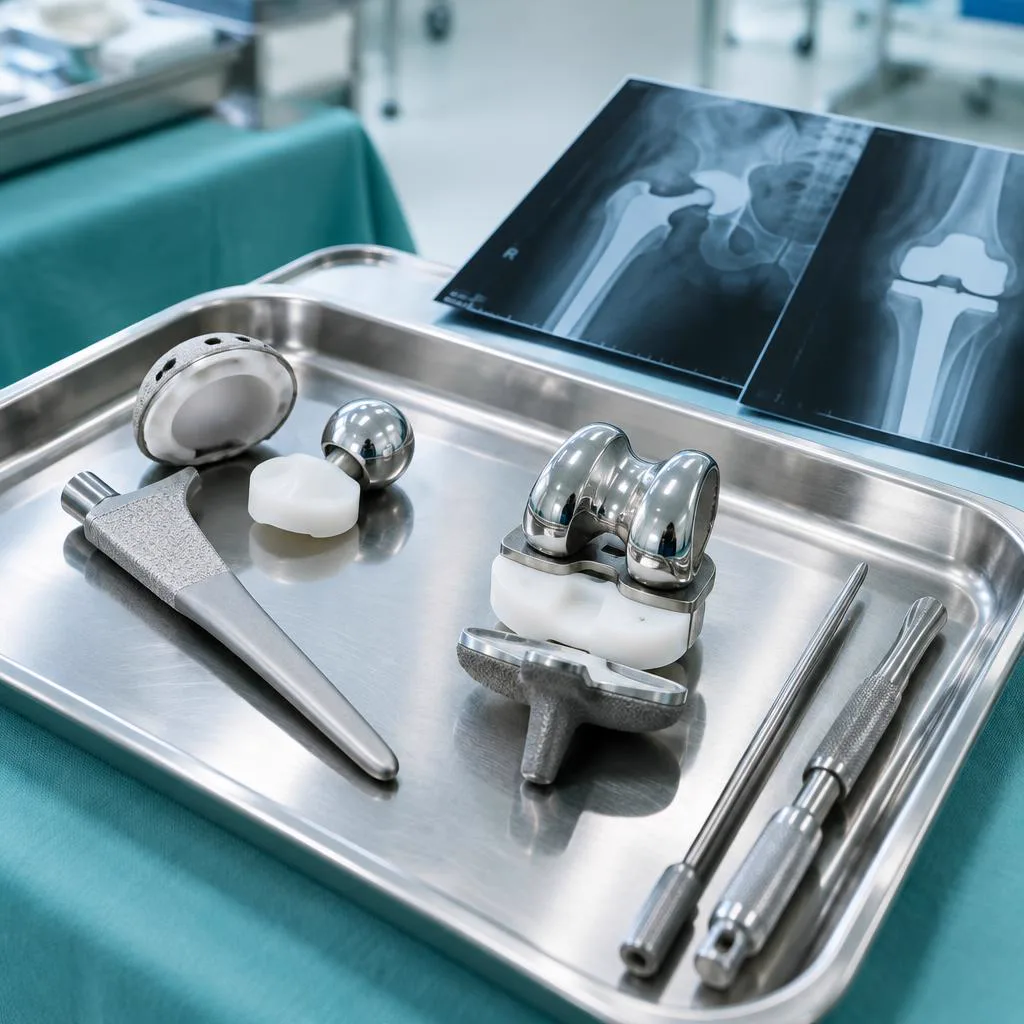
Hip and knee joint replacement implants arranged beside diagnostic radiographs at Leela Health Care, Banashankari

In-Clinic Evaluation

Joint examination • Scan review on screen • Clear treatment plan

OVERVIEW

Understanding Joint Replacement: Restoring Mobility in Hips and Shoulders

How joint replacement relieves severe arthritis and avascular necrosis (AVN), restoring natural movement and leg length balance.

Hip and shoulder replacements replace worn ball-and-socket surfaces with ultra-smooth ceramic and titanium bearings, ending deep groin or shoulder pain and restoring fluid, natural range.

How Hip Arthritis and Avascular Necrosis (AVN) Damage the Joint

The hip is a deep ball-and-socket joint where the rounded head of the thigh bone rotates smoothly inside the pelvic socket (acetabulum). When arthritis wears down the cartilage, or when avascular necrosis (AVN) interrupts blood flow to the femoral head, bone tissue weakens and the ball can lose its round shape.

Patients with hip joint damage usually do not feel pain on the outside of the hip: they feel a deep, grinding ache in the groin or buttock that radiates down the front of the thigh to the knee. Everyday movements like putting on shoes, cutting toenails, or sitting in low chairs become agonizingly stiff.

Why Hip Replacement Often Recovers Faster Than Knee Replacement

Many patients are surprised to learn that recovering from a total hip replacement is often quicker and involves less post-operative soreness than a knee replacement. Because the hip is inherently stable inside its deep socket, pain relief is remarkably rapid once the damaged surfaces are replaced.

Most patients stand and take their first steps with a walker on the day of surgery or the following morning. Within 2 to 3 weeks, many walk comfortably around the house with only a light cane, experiencing an immediate return of smooth, painless hip rotation.

Modern Implants: Ceramic Bearings & Titanium Press-Fit

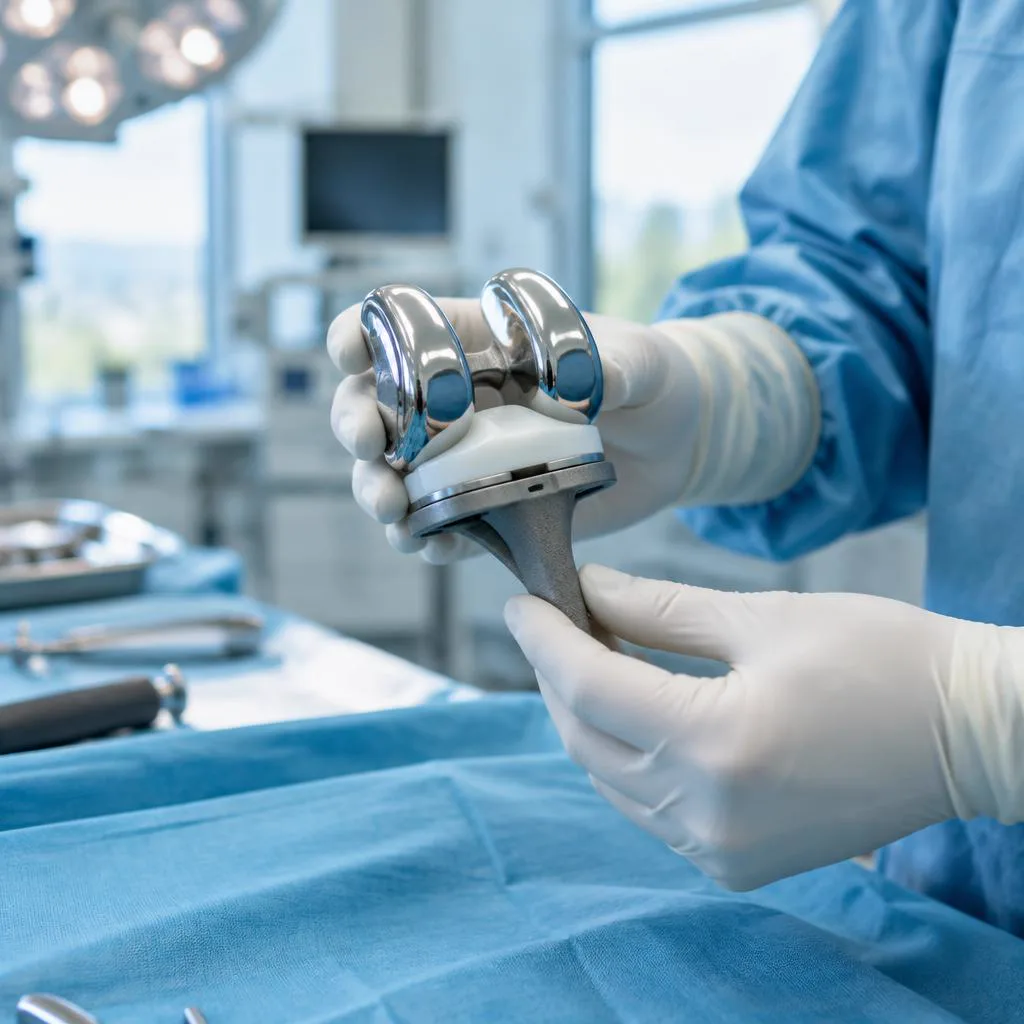
Today's hip replacements use uncemented titanium shells coated with a porous surface that encourages your natural bone to grow directly into the metal over time. This creates a permanent biological bond between your skeleton and the implant.

The ball is made of ultra-tough medical ceramic that glides against a highly cross-linked polyethylene liner. These ceramic-on-polyethylene bearings produce negligible wear over decades, making them suitable for young, active adults as well as seniors.

Shoulder Replacement for Pain-Free Arm Movement

When severe arthritis or old rotator cuff tears ruin the shoulder joint, raising your arm past shoulder height or sleeping on your side becomes nearly impossible. Shoulder arthroplasty replaces the damaged humeral head and socket, relieving nighttime pain and restoring functional reach.
TREATMENT OPTIONS

Non-Surgical Care First — Surgery Only When Needed

We start by exploring every way to relieve your pain without an operation — through exercise, physical therapy, and medication. Surgery is only considered when those options stop helping and you need lasting relief to get your life back.

Non-Surgical Treatments First

Non-Surgical Joint Preservation

When hip or shoulder wear is in early stages, we focus on treatments that relieve pain and protect your joint from further damage.

  • Protected weight-bearing and crutch offloading to decrease intra-articular pressure
  • Targeted hip abductor and rotator cuff conditioning with physical therapy
  • Anti-inflammatory medicines and medical bone-health care
  • Intra-articular hyaluronic acid or biologic injections in selected joint profiles
Our approach: We review your progress after 4 to 6 weeks of physiotherapy and medical care. We only discuss surgery if your joint is not improving.
When Surgery is the Right Choice

When Joint Replacement is Recommended

Surgery is indicated when structural collapse has occurred and joint movement is severely compromised.

  • Femoral head collapse or severe joint incongruity (Ficat Stage 3 or 4 AVN)
  • Inability to walk 15 minutes or tie footwear without disabling groin pain
  • Persistent nocturnal pain disturbing sleep despite medications
  • Complete loss of joint space and secondary osteophyte formation on X-rays
Clear explanation: Dr. Prajwal sits down with you, walks you through your X-rays or MRI scans on the clinic screen, and explains exactly what is happening in your joint.
WHAT WE TREAT

Common Conditions Treated by this Procedure

This treatment specifically helps relieve pain, stiffness, or joint catching caused by these conditions.

Hip & Shoulder Arthritis

Progressive cartilage loss causing deep groin, buttock, or shoulder pain that limits daily functional movement.

Femoral Head Avascular Necrosis (AVN)

Disruption of blood supply to the hip bone leading to structural collapse and secondary joint arthritis.

Knee Arthritis

Severe multi-compartmental knee degeneration requiring anatomical resurfacing and alignment correction.

HOW IT IS DONE

Anatomical Restoration & Wear-Resistant Bearings

Modern joint arthroplasty relies on anatomical positioning that restores your natural leg length and offset, paired with ultra-low wear bearing couples designed for lifelong durability.

Uncemented Titanium Press-Fit Fixation

Highly porous titanium cups and stems that foster direct biological bone ingrowth (osseointegration) for rigid, lifetime stability.

Ceramic-on-Polyethylene Bearings

Biolox delta ceramic heads gliding against cross-linked polyethylene, virtually eliminating wear particles and osteolysis risk.

Precise Leg Length & Offset Restoration

Preoperative digital templating to equalize leg lengths and restore natural abductor muscle tension, eliminating post-operative limp.

RECOVERY TIME

What Your Recovery Typically Looks Like

A clear, realistic progression — from taking your first steps after treatment to returning to work, family life, and sports.

Phase 1: Day 0 – 2

Immediate Mobilization

Standing and walking with a walker on the day of or day following surgery. Hip precautions taught to protect the joint during early healing.

Target Milestone

Independent walking in hospital corridors

Phase 2: Weeks 1 – 3

Home Rehabilitation & Precautions

Home walking drills, abductor strengthening, and adherence to hip movement guidelines. Suture check performed at day 12–14.

Target Milestone

Stepping up stairs and transitioning to a single cane

Phase 3: Weeks 4 – 8

Independent Functional Mobility

Discontinuing walking aids for unassisted walking. Driving resumption and gradual return to light office duties.

Target Milestone

Walking 1–2 km without limping or hip discomfort

Phase 4: Month 2 – 4+

Long-Term Active Living

Return to active travel, swimming, golf, cycling, and recreational walking with normalized gait mechanics.

Target Milestone

Full return to active lifestyle without joint pain

WHAT TO EXPECT

What to Expect at Your Appointment in Banashankari

Consultations at our 100 Feet Road clinic are unhurried and clear. Dr. Prajwal listens to your symptoms, examines your joint, and gives you honest advice with zero pressure.

Hands-on Joint & Movement Check

Dr. Prajwal personally checks your joint range, ligament strength, tenderness, and how you walk.

Reviewing Your Scans Together

We review your X-rays or MRI scans on the clinic screen, showing you clearly what is causing your discomfort.

A Clear, Practical Treatment Plan

You receive a clear breakdown of non-surgical options, exercises, recovery timelines, and clear next steps.

COMMON QUESTIONS

Frequently Asked Questions About Joint Replacement Surgery

Direct answers to the practical questions patients and their families ask Dr. Prajwal before deciding on care.

Book an appointment

Fill in your details and Dr. Prajwal's clinic team will confirm your consultation slot by phone or WhatsApp.

Prefer to call? 080 4803 4373

Your details are sent directly to the clinic over WhatsApp; nothing is stored on this website. The clinic will confirm your slot by phone.

Clinic Address

7th Block, 4th Phase, 2/Y 6th Main, 100 Ft Road, opposite Popular Bajaj, Banashankari 3rd Stage, Bangalore 560085

Mon–Sat: 10:00 AM – 9:00 PM · Sunday: Closed

Hip and knee joint replacement implants arranged beside diagnostic radiographs at Leela Health Care, Banashankari