Meniscus Tear: Symptoms, Mechanical Locking & Repair Options
The menisci are two C-shaped cartilage shock absorbers in each knee. Tears can be acute (from a twist during sports) or degenerative (from gradual wear in middle age). Preserving the meniscus is our primary clinical objective.
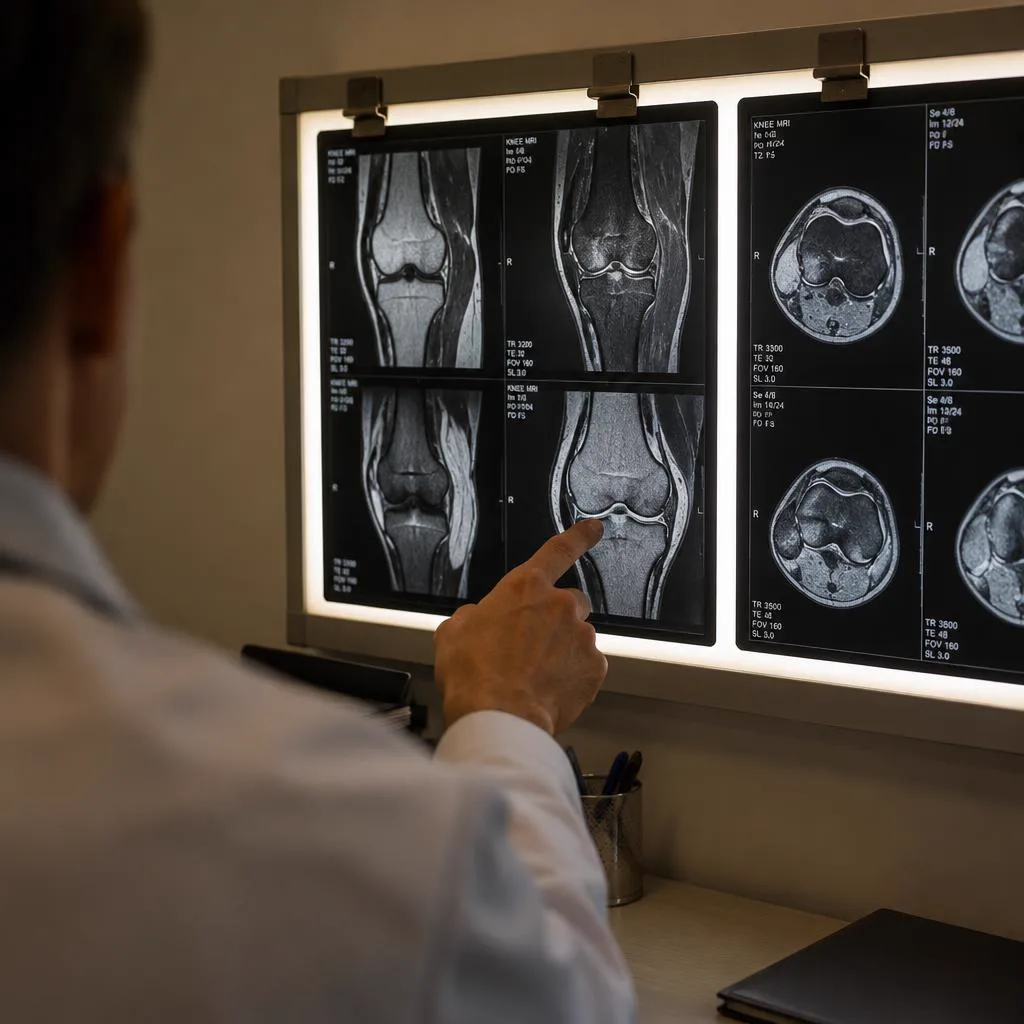
In-Clinic Clinical Evaluation
Hands-on Joint Check • Digital X-Ray on Site • Clear Care Pathway
Understanding Meniscus (Cartilage) Tears
Orthopaedic pain is often misunderstood. Patients experiencing joint stiffness, catching, or radiating back discomfort frequently fear immediate major surgery. In clinical practice at Leela Health Care, our philosophy is anchored in clear diagnosis, patient education, and exhausting non-surgical therapies before any surgical pathway is contemplated.
What You Feel: Typical Signs & Sensations
Symptoms often start subtly before progressing. Recognizing these early signs helps prevent compensatory strain on adjacent joints.
- Sharp pain precisely located along the inner or outer joint line of the knee
- Knee clicking, popping, or catching during squatting or stair descent
- Mechanical knee locking, where the joint physically catches and cannot be straightened
- Mild to moderate swelling that typically appears 24 to 48 hours after activity
- A sensation of weakness or feeling that the knee is not fully reliable
Why It Happens: Joint & Tissue Mechanics
Joint and spine discomfort is rarely caused by a single isolated event; it usually reflects mechanical load, tissue wear, historic trauma, or postural stress.
Twisting or pivoting on a flexed, weight-bearing knee during sports or manual work
Deep squatting or rising from the floor with heavy loads
Age-related degenerative changes where dried cartilage frays with minor twists
Associated knee instability from a ruptured ACL
Clinical Diagnosis & Joint Examination at Leela Health Care
Accurate diagnosis requires direct clinical palpation, joint stress testing, and targeted imaging reviewed with you in the consultation room.
Localized Joint Line Palpation
Direct digital palpation along the medial and lateral joint lines to identify exact tear location and rule out collateral ligament injury.
McMurray & Apley Provocative Tests
Controlled rotational stress applied to the flexed knee to reproduce joint catching, clicking, or localized discomfort.
High-Resolution MRI Imaging
Identifies tear geometry (bucket-handle, radial, horizontal, or flap) and assesses blood supply (red-white zones).
Conservative-First Care: What You Can Do First
We prioritize non-invasive measures. For most patients, disciplined early care restores function without surgical intervention.
Temporary Activity Modification
Avoiding deep squats, kneeling, and sudden pivoting while the inflamed tissue settles.
Targeted Knee Stabilizer Rehabilitation
Strengthening the vastus medialis obliquus (VMO) and hamstring stabilizers to reduce shearing stresses.
Short-Term Anti-inflammatory Management
Targeted medications to calm localized synovial irritation and joint effusion.
When Conservative Care Is Not Enough
Surgery is never a first choice, but delaying necessary intervention when structural criteria are met can cause secondary damage. Here is when our clinical specialists recommend evaluating surgical options:
Locked Knee Joint
A displaced bucket-handle tear physically blocking joint extension requiring prompt reduction.
Repairable Tear in Vascular Red Zone
Peripheral tears with robust blood supply that have high potential for complete biological healing if sutured.
Persistent Pain and Mechanical Catching
Symptoms failing 6 to 8 weeks of supervised physical therapy that disrupt work or basic mobility.
Treatment Pathways at Leela Health Care
Whenever possible, our clinical philosophy at Leela Health Care is to save the meniscus rather than remove it. Many degenerative tears settle with structured strengthening and activity modification. When mechanical locking, clicking, or persistent tears in the vascular zone require direct repair, our surgical team transitions care to our dedicated Meniscus Injury Treatment pathway.
Meniscus Injury Treatment
Joint-preserving arthroscopic keyhole meniscus repair and partial trimming, protecting the knee from future wear.
Common Questions About Meniscus (Cartilage) Tears
Clear, direct answers to what patients frequently ask during their consultation at our Banashankari clinic.
Book an appointment
Fill in your details and Dr. Prajwal's clinic team will confirm your consultation slot by phone or WhatsApp.
Clinic Address
7th Block, 4th Phase, 2/Y 6th Main, 100 Ft Road, opposite Popular Bajaj, Banashankari 3rd Stage, Bangalore 560085
Mon–Sat: 10:00 AM – 9:00 PM · Sunday: Closed