A Doctor's Guide to Sports Injuries: Sprains, Tears, and Safe Return to Play
How to tell a sprain from a tear, why early movement beats total bed rest, and how structured rehab prevents re-injury.
Treating a sports injury is not just about resting until the pain stops. True recovery requires identifying the exact injured fibers, restoring full joint range and muscle symmetry, and retraining movement patterns so you play without fear.
Sprain vs. Strain: Understanding Your Injury
In sports medicine, 'sprain' and 'strain' refer to two completely different structures. A sprain is an injury to a ligament: the tough fibrous bands connecting bone to bone that stabilize joints (such as the ATFL in an ankle sprain or the ACL in the knee). A strain is an injury to a muscle or its attaching tendon (such as a hamstring pull or groin strain).
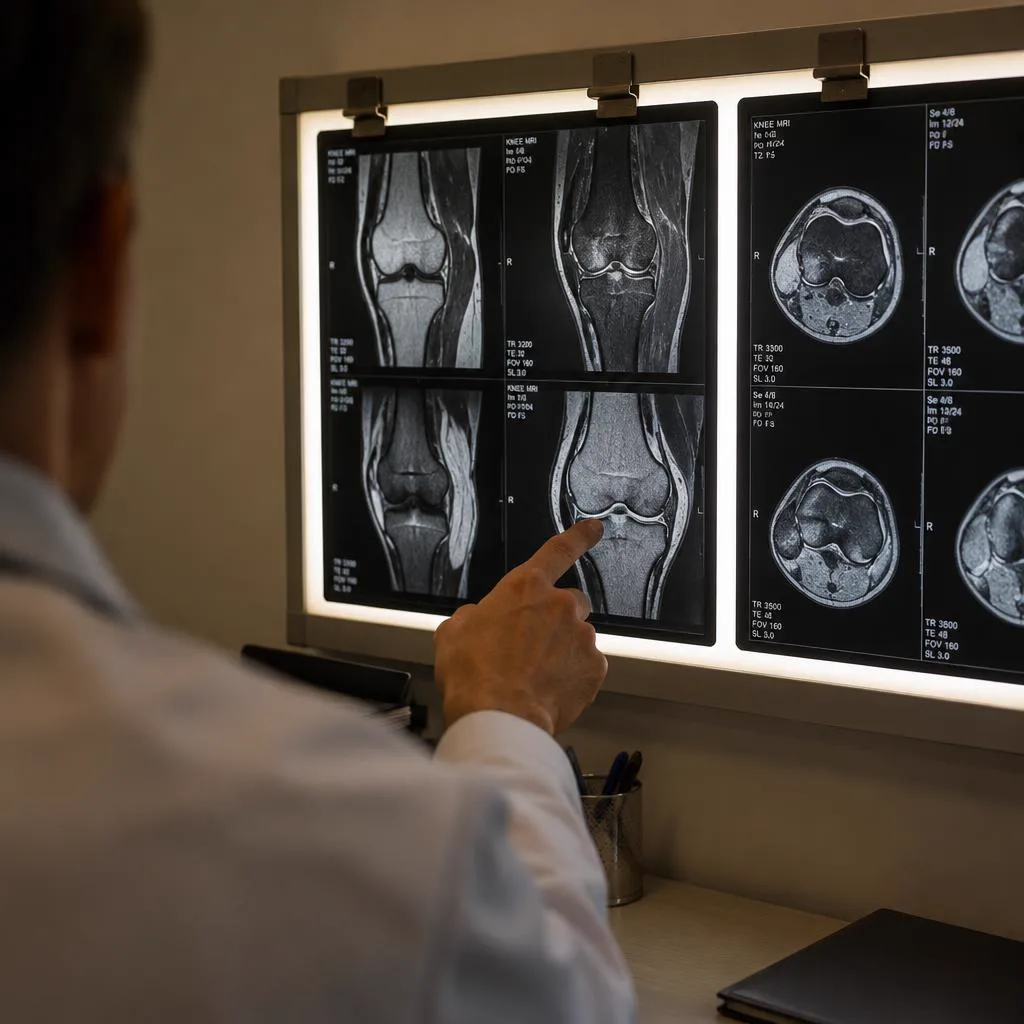
Both injuries range from mild Grade 1 micro-tears to severe Grade 3 complete ruptures. Knowing the exact grade through clinical testing and imaging is essential: while a Grade 1 ankle sprain needs only two weeks of guided loading, an unaddressed Grade 3 ligament tear can lead to chronic joint instability.
Why Total Bed Rest is Outdated: The Power of Guided Loading
For decades, the standard advice for sports injuries was RICE (Rest, Ice, Compression, Elevation). Today, sports medicine has evolved. While ice and compression remain helpful for initial swelling, prolonged total rest actually slows healing and causes rapid muscle wasting and joint stiffness.
Under the modern POLICE protocol (Protection, Optimal Loading, Ice, Compression, Elevation), we introduce controlled, pain-free movement as early as possible. Gentle loading stimulates cellular repair, aligns new collagen fibers along functional lines of pull, and prevents scar tissue from freezing your joint.
Tackling Chronic Tendon Pain (Tendinopathy)
Many athletes struggle with persistent tendon pain, such as jumper's knee (patellar tendon), Achilles stiffness, tennis elbow, or rotator cuff ache. These are usually not simple inflammation; they are tendinopathies where tendon fibers become disorganized from repetitive overloading.
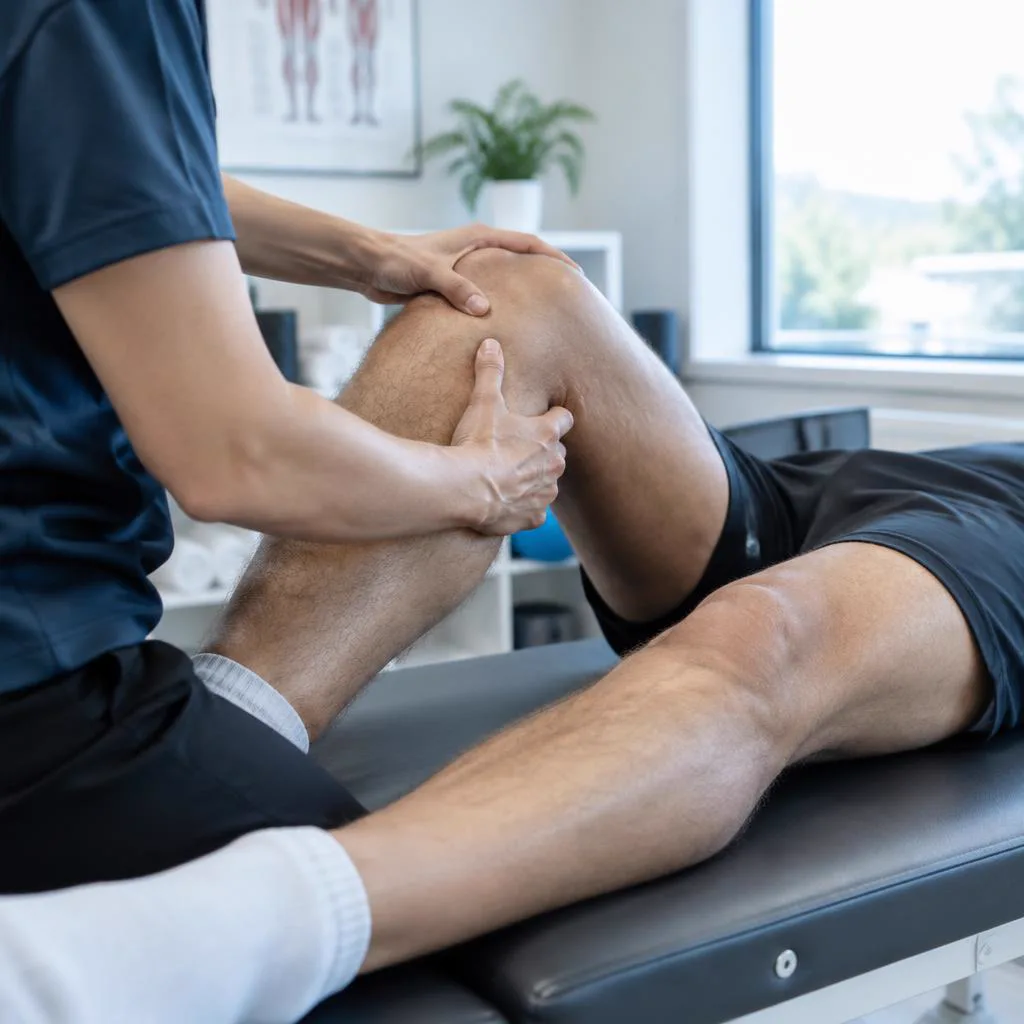
Passive treatments like rest or painkillers rarely fix chronic tendinopathy. The gold-standard solution is progressive eccentric exercise, where the tendon is loaded while lengthening. In stubborn cases, biological treatments like Platelet-Rich Plasma (PRP) injections help jumpstart healing in dormant tendon tissue.
Objective Clearance: When Are You Truly Ready to Play?
The biggest mistake athletes make is returning to the field as soon as pain subsides. Absence of pain does not mean your ligament has regained strength or that your reflexes are back. Returning prematurely is the number one cause of repeat tears.
Before clearing an athlete to return to competitive sports, Dr. Prajwal conducts objective functional tests: limb symmetry testing (ensuring the injured leg has 90%+ strength of the uninjured leg), single-leg hop tests, and sport-specific agility drills without hesitation or swelling.