Back Pain & Sciatica: Causes, Self-Care & Non-Surgical Spine Treatment
Sciatica occurs when an inflamed or herniated spinal disc compresses a lumbar nerve root. The encouraging clinical reality: over 90% of slip disc cases resolve completely without surgery through targeted spinal rehabilitation.
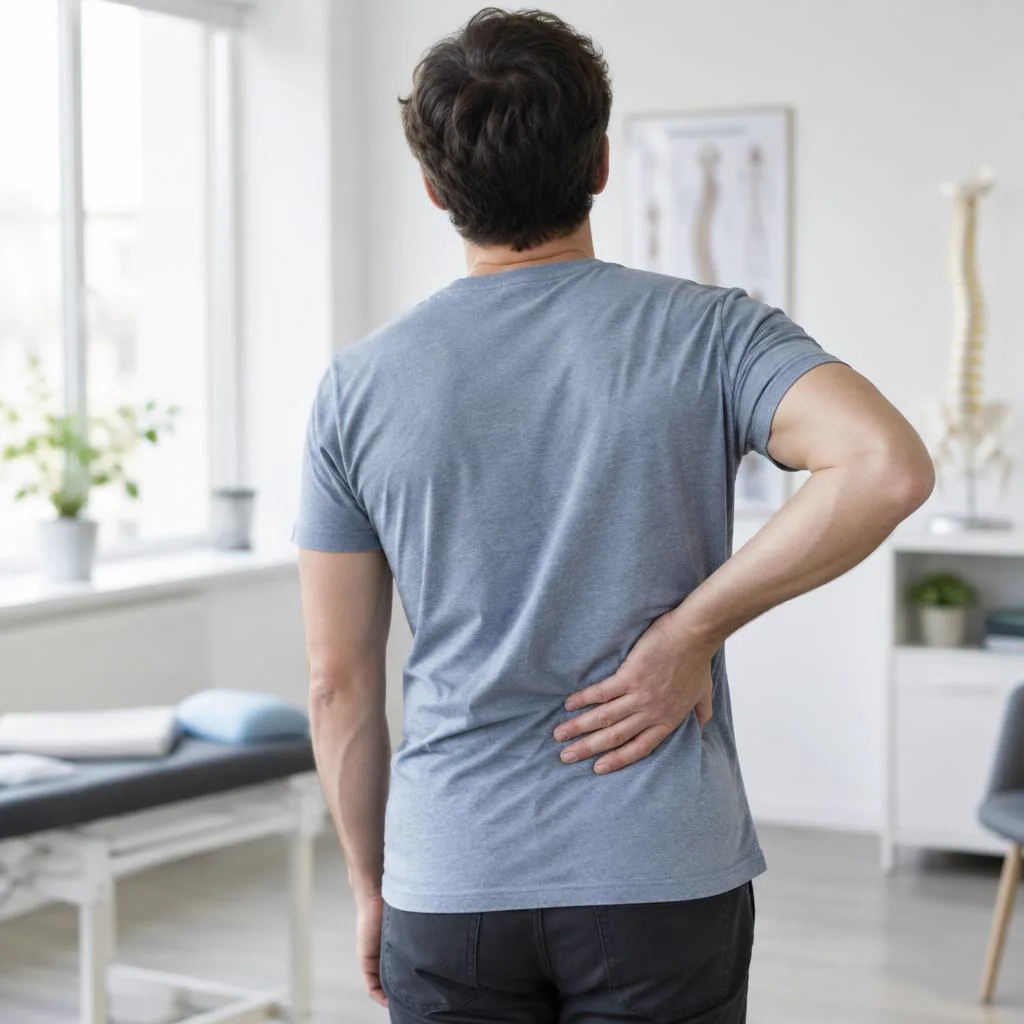
In-Clinic Clinical Evaluation
Hands-on Joint Check • Digital X-Ray on Site • Clear Care Pathway
Understanding Back Pain & Sciatica (Slip Disc)
Orthopaedic pain is often misunderstood. Patients experiencing joint stiffness, catching, or radiating back discomfort frequently fear immediate major surgery. In clinical practice at Leela Health Care, our philosophy is anchored in clear diagnosis, patient education, and exhausting non-surgical therapies before any surgical pathway is contemplated.
What You Feel: Typical Signs & Sensations
Symptoms often start subtly before progressing. Recognizing these early signs helps prevent compensatory strain on adjacent joints.
- Sharp, electric, or burning pain that starts in the low back and travels through the buttock down the leg
- Numbness, tingling, or 'pins and needles' in the calf, heel, or big toe
- Increased pain when sitting for more than 15 minutes or bending forward to pick up objects
- Spike in shooting leg pain during coughing, sneezing, or straining
- Difficulty standing up straight after getting out of bed or a chair
- Weakness in the foot (difficulty lifting the toes or walking on heels)
Why It Happens: Joint & Tissue Mechanics
Joint and spine discomfort is rarely caused by a single isolated event; it usually reflects mechanical load, tissue wear, historic trauma, or postural stress.
Age-related loss of spinal disc hydration causing outer ring (annulus fibrosus) tears
Sudden twisting while lifting heavy luggage or furniture from the floor
Prolonged slouched sitting behind computers or driving on unpaved roads
Core muscle weakness shifting trunk weight directly onto spinal discs
Sudden slip or fall landing forcefully on the buttocks
Clinical Diagnosis & Joint Examination at Leela Health Care
Accurate diagnosis requires direct clinical palpation, joint stress testing, and targeted imaging reviewed with you in the consultation room.
Straight Leg Raise (SLR) & Neurological Testing
Checking nerve tension, deep tendon reflexes, and myotome muscle strength (toe and ankle extension) to identify the exact compressed nerve level.
Digital Spine Radiographs on Site
Assesses spinal alignment, disc space narrowing, vertebral slippage, and pelvic posture.
Lumbar MRI Imaging
Identifies the exact level, size, and direction of disc extrusion and degree of nerve root compression.
Conservative-First Care: What You Can Do First
We prioritize non-invasive measures. For most patients, disciplined early care restores function without surgical intervention.
Active Spine Extension & Decompression
McKenzie extension exercises that encourage the displaced disc gel to shift away from the irritated nerve.
Deep Core & Pelvic Stabilization
Activating the transversus abdominis and multifidus muscles to form a natural internal spinal brace.
Targeted Nerve Pain Management
Short courses of neural pain modulators, anti-inflammatories, and muscle relaxants to calm acute sciatica.
Ergonomic Lumbar Support
Proper seating height, lumbar pillows, and breaking up continuous sitting every 45 minutes.
When Conservative Care Is Not Enough
Surgery is never a first choice, but delaying necessary intervention when structural criteria are met can cause secondary damage. Here is when our clinical specialists recommend evaluating surgical options:
Progressive Motor Weakness (Foot Drop)
Inability to lift your foot while walking, causing toes to scuff the floor.
Cauda Equina Syndrome (Emergency)
Sudden loss of bladder or bowel sensation, incontinence, or numbness between the thighs.
Intractable Pain Refractory to 6-8 Weeks of Therapy
Unrelenting leg pain that completely incapacitates daily life despite optimal conservative care.
Treatment Pathways at Leela Health Care
Low back pain can be deeply disruptive, but hearing the words 'slip disc' should not trigger immediate panic about spinal surgery. At our Banashankari clinic, our team treats disc herniations with an aggressive conservative-first approach. For the small percentage of patients where progressive nerve weakness or unrelenting pain resists non-surgical care, we provide seamless guidance into our Slip Disc Treatment pathway.
Slip Disc Treatment
Non-surgical spine care, ergonomic re-education, epidural nerve blocks, and minimally invasive microdiscectomy.
Common Questions About Back Pain & Sciatica (Slip Disc)
Clear, direct answers to what patients frequently ask during their consultation at our Banashankari clinic.
Book an appointment
Fill in your details and Dr. Prajwal's clinic team will confirm your consultation slot by phone or WhatsApp.
Clinic Address
7th Block, 4th Phase, 2/Y 6th Main, 100 Ft Road, opposite Popular Bajaj, Banashankari 3rd Stage, Bangalore 560085
Mon–Sat: 10:00 AM – 9:00 PM · Sunday: Closed