Skip to content

Slip Disc & Sciatica Treatment in Banashankari, Bangalore

A slip disc (herniated or prolapsed intervertebral disc) occurs when the soft gel-like inner core of a spinal disc pushes through its fibrous outer ring, impinging on adjacent nerve roots. This causes sharp back pain and classic sciatica radiating down into the buttock, leg, and foot. At Leela Health Care, over 85% of slip disc patients recover completely without requiring surgery.

Non-surgical care first•100 Feet Rd, Banashankari
Patient undergoing clinical evaluation for lower back pain, sciatica, and lumbar disc herniation in Bangalore

In-Clinic Evaluation

Joint examination • Scan review on screen • Clear treatment plan

OVERVIEW

A Doctor's Guide to Slip Discs & Sciatica: How Discs Heal and What Truly Works

Why over 85% of herniated discs heal without surgery, what causes radiating leg pain, and when keyhole microdiscectomy is needed.

A slip disc sounds alarming, but the vast majority of herniated discs heal naturally on their own. Our care focuses on calming nerve inflammation and guiding you through exercises so you avoid surgery safely.

What Actually Happens When a Disc 'Slips'

The phrase 'slip disc' is actually a misleading term: spinal discs do not physically slide out of place. Instead, think of an intervertebral disc like a jelly doughnut. It has a tough, fibrous outer ring (annulus fibrosus) and a soft, gel-like shock-absorbing center (nucleus pulposus) that cushions your spinal bones.

Under heavy lifting, twisting, or prolonged slumping, the tough outer ring can develop a small tear. The soft gel-like center bulges or leaks outward (herniation). When this extruded gel touches or presses against an adjacent spinal nerve root, it triggers severe chemical irritation and mechanical compression.

Why Sciatica Hurts More in Your Leg Than Your Back

Many patients are baffled that while their problem is in their lower back, their worst pain is down in their buttock, thigh, calf, or foot. This occurs because the pinched nerve root is part of the sciatic nerve, the longest and widest nerve in your body, running from your spine all the way to your toes.

When the nerve root is pinched in your lower spine, your brain interprets the electrical distress signals as severe shooting, electric-shock, or burning pain anywhere along the nerve pathway. Sitting down, bending forward, coughing, or sneezing raises pressure inside the disc, making the leg pain flare up sharply.

How Discs Naturally Resorb Without Surgery

Here is the most encouraging fact about slip discs: your body has a remarkable natural mechanism to heal them. When disc material herniates into the spinal canal, your immune system recognizes it as foreign tissue and releases specialized enzymes and macrophages that naturally dehydrate, shrink, and break down the fragment over 6 to 12 weeks.

Our role at Leela Health Care is to support this natural biological healing: using targeted nerve medications to manage pain, extension-based McKenzie exercises to encourage the disc bulge to centralize, and guided core conditioning to protect the segment.

When Keyhole Microdiscectomy is the Right Move

In about 10% to 15% of cases, the herniated fragment is too large or severe leg pain persists beyond 6 to 8 weeks despite disciplined conservative care. In other cases, nerve pressure causes muscle weakness, such as difficulty lifting your foot when walking (foot drop).

When surgery is necessary, Dr. Prajwal performs a microdiscectomy through a 2.5cm cosmetic keyhole incision using high surgical magnification. Only the small extruded fragment pressing on the nerve is removed, leaving 90%+ of your natural disc intact. Patients experience immediate relief of leg pain and return home within 24 hours.
TREATMENT OPTIONS

Non-Surgical Care First — Surgery Only When Needed

We start by exploring every way to relieve your pain without an operation — through exercise, physical therapy, and medication. Surgery is only considered when those options stop helping and you need lasting relief to get your life back.

Non-Surgical Treatments First

How Most Discs Heal Naturally Without Surgery (85%+ Success)

The vast majority of disc herniations resorb and heal naturally when chemical inflammation around the nerve root is resolved.

  • Short rest period (24–48 hours maximum) followed by controlled walking; bed rest is strictly minimized
  • Gentle nerve-stretching exercises and guided back-strengthening physical therapy
  • Medications targeting neuropathic pain, disc inflammation, and paraspinal muscle spasms
  • Targeted transforaminal root block injections for rapid symptom relief in acute severe episodes
Our approach: We review your progress after 4 to 6 weeks of physiotherapy and medical care. We only discuss surgery if your joint is not improving.
When Surgery is the Right Choice

When Microdiscectomy is Recommended

Surgery is indicated when physical nerve compression causes muscle failure or persists past 6 to 8 weeks.

  • Severe radiating sciatic pain persisting past 6–8 weeks despite strict conservative therapy
  • Objective motor weakness: inability to lift the big toe, walk on heels, or ankle foot drop
  • Large extruded disc fragment causing intolerable pain that prevents basic self-care
  • Cauda equina signs: changes in urinary sensation or saddle numbness (immediate emergency)
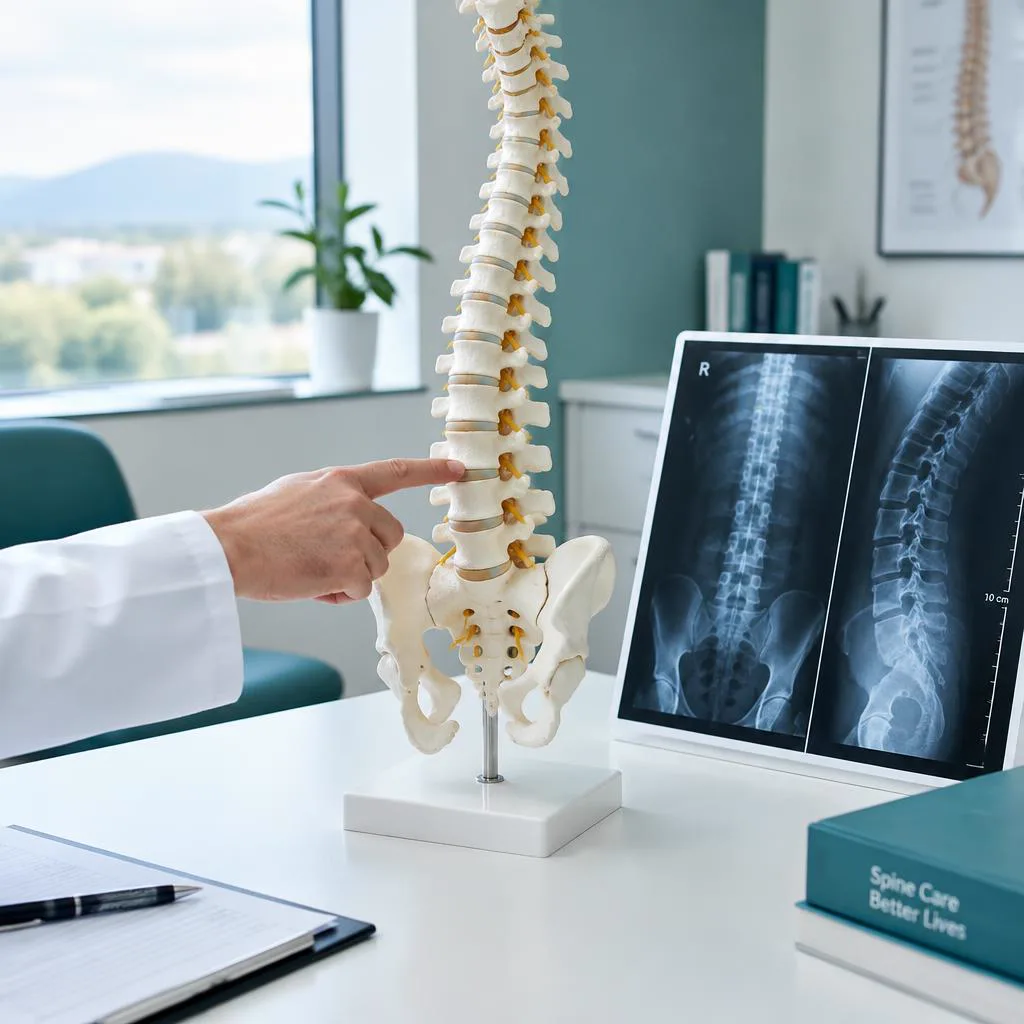
Clear explanation: Dr. Prajwal sits down with you, walks you through your X-rays or MRI scans on the clinic screen, and explains exactly what is happening in your joint.
WHAT WE TREAT

Common Conditions Treated by this Procedure

This treatment specifically helps relieve pain, stiffness, or joint catching caused by these conditions.

Back Pain & Sciatica

Acute and chronic lumbar disc herniations (L4-L5, L5-S1) causing radiating nerve pain down the leg.

Spinal Instability & Compression

Degenerative disc disease with secondary spinal canal narrowing and nerve root impingement.

Joint Locking & Instability

Facet joint irritation and secondary compensatory joint strain resulting from collapsed disc height.

HOW IT IS DONE

Minimally Invasive Microdiscectomy

When surgery is required, Dr. Prajwal K N performs a microdiscectomy through a 2.5cm cosmetic keyhole incision under surgical magnification. Only the ruptured fragment pressing on the nerve is removed, leaving 90%+ of your natural disc intact.

Operating Microscope Precision

Magnified, illuminated view that allows delicate freeing of the compressed nerve root with zero traction or neural injury.

Targeted Fragmentectomy

Removing only the extruded herniated fragment causing nerve irritation while preserving healthy disc architecture and spinal stability.

Daycare or 24-Hour Recovery

Minimal muscle disruption allows immediate relief of leg pain and unassisted walking within 6 to 12 hours of surgery.

RECOVERY TIME

What Your Recovery Typically Looks Like

A clear, realistic progression — from taking your first steps after treatment to returning to work, family life, and sports.

Phase 1: Week 1

Immediate Leg Pain Relief

Radiating sciatic pain usually disappears immediately following nerve decompression. Walking comfortably at home on day 1 with light spine precautions.

Target Milestone

Walking upright without sciatic shooting pain

Phase 2: Weeks 2 – 4

Nerve Mobility & Incision Healing

Surgical skin closure inspected at day 12–14. Progressive walking program (20–30 minutes daily) and gentle neural flossing exercises.

Target Milestone

Discontinuing nerve pain medications and sitting for 30 minutes

Phase 3: Weeks 4 – 8

Core Strengthening & Return to Work

Starting deep transversus abdominis and multifidus core stabilization drills. Return to desk work, driving, and normal household activities.

Target Milestone

Resuming full desk job and driving short commutes

Phase 4: Month 2 – 3+

Long-Term Prevention & Conditioning

Learning spine-safe lifting mechanics, ergonomic workstation optimization, and progressive core conditioning to permanently prevent recurrence.

Target Milestone

Full return to active lifestyle with spine-healthy habits

WHAT TO EXPECT

What to Expect at Your Appointment in Banashankari

Consultations at our 100 Feet Road clinic are unhurried and clear. Dr. Prajwal listens to your symptoms, examines your joint, and gives you honest advice with zero pressure.

Hands-on Joint & Movement Check

Dr. Prajwal personally checks your joint range, ligament strength, tenderness, and how you walk.

Reviewing Your Scans Together

We review your X-rays or MRI scans on the clinic screen, showing you clearly what is causing your discomfort.

A Clear, Practical Treatment Plan

You receive a clear breakdown of non-surgical options, exercises, recovery timelines, and clear next steps.

COMMON QUESTIONS

Frequently Asked Questions About Slip Disc Treatment

Direct answers to the practical questions patients and their families ask Dr. Prajwal before deciding on care.

Book an appointment

Fill in your details and Dr. Prajwal's clinic team will confirm your consultation slot by phone or WhatsApp.

Prefer to call? 080 4803 4373

Your details are sent directly to the clinic over WhatsApp; nothing is stored on this website. The clinic will confirm your slot by phone.

Clinic Address

7th Block, 4th Phase, 2/Y 6th Main, 100 Ft Road, opposite Popular Bajaj, Banashankari 3rd Stage, Bangalore 560085

Mon–Sat: 10:00 AM – 9:00 PM · Sunday: Closed

Patient undergoing clinical evaluation for lower back pain, sciatica, and lumbar disc herniation in Bangalore