Spinal Instability & Stenosis: Symptoms, Walking Pain & Fusion Guide
Spinal stenosis and spondylolisthesis cause the spinal canal to narrow, pinching nerves as you walk or stand. Leaning forward over a shopping cart relieves the ache, a classic sign known as the 'shopping cart sign'.
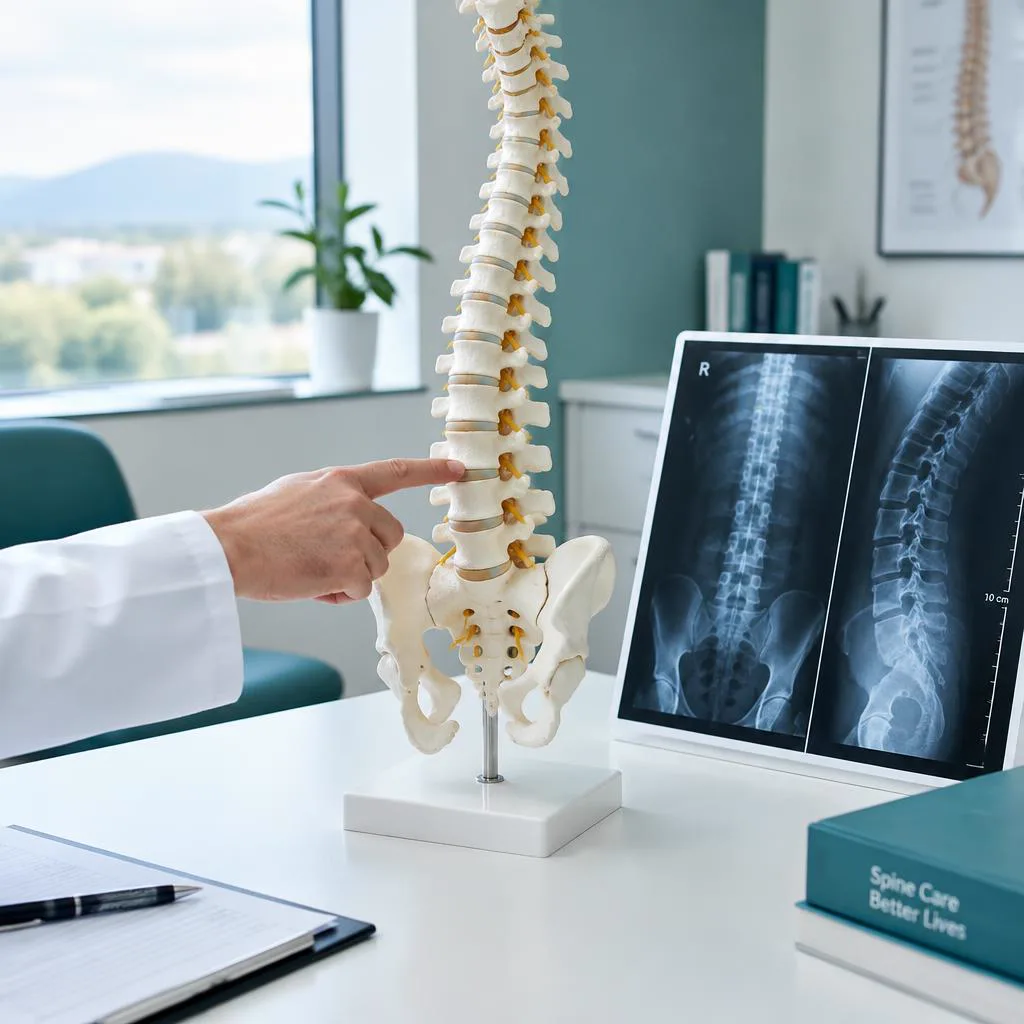
In-Clinic Clinical Evaluation
Hands-on Joint Check • Digital X-Ray on Site • Clear Care Pathway
Understanding Spinal Instability & Nerve Compression
Orthopaedic pain is often misunderstood. Patients experiencing joint stiffness, catching, or radiating back discomfort frequently fear immediate major surgery. In clinical practice at Leela Health Care, our philosophy is anchored in clear diagnosis, patient education, and exhausting non-surgical therapies before any surgical pathway is contemplated.
What You Feel: Typical Signs & Sensations
Symptoms often start subtly before progressing. Recognizing these early signs helps prevent compensatory strain on adjacent joints.
- A heaviness, numbness, or burning ache in both legs that develops after walking a fixed distance (neurogenic claudication)
- Immediate relief of leg discomfort upon sitting down, crouching, or leaning forward
- A catching or 'clicking' sensation in the lower back accompanied by sudden sharp twinges
- Feeling that your back is weak or unstable when standing still for more than a few minutes
- Decreased balance and unsteadiness when walking on uneven ground
- Stiffness in the hips and hamstrings as the body attempts to stabilize the pelvis
Why It Happens: Joint & Tissue Mechanics
Joint and spine discomfort is rarely caused by a single isolated event; it usually reflects mechanical load, tissue wear, historic trauma, or postural stress.
Degenerative spondylolisthesis (vertebral slippage due to facet joint wear and ligament laxity)
Hypertrophy (thickening) of the ligamentum flavum narrowing the spinal canal
Congenital narrowness of the spinal canal combined with adult arthritic spurs
Spondylolysis (stress fracture of the pars interarticularis, common in gymnasts and cricketers)
Clinical Diagnosis & Joint Examination at Leela Health Care
Accurate diagnosis requires direct clinical palpation, joint stress testing, and targeted imaging reviewed with you in the consultation room.
Dynamic Flexion-Extension X-Rays on Site
Standing X-rays taken while you bend forward and backward to catch abnormal vertebral shifting in real time.
High-Field Lumbar MRI
Provides clear cross-sectional measurements of the spinal canal diameter and nerve root crowding.
Functional Walking Tolerance Assessment
Measuring the exact distance you can comfortably walk before leg cramping sets in.
Conservative-First Care: What You Can Do First
We prioritize non-invasive measures. For most patients, disciplined early care restores function without surgical intervention.
Flexion-Biased Physical Therapy
Exercises that encourage slight trunk flexion to open up the spinal canal and relieve nerve crowding.
Deep Trunk & Pelvic Stabilization
Training the abdominal wall and gluteal muscles to prevent excessive lumbar arching (lordosis).
Targeted Epidural Steroid Injections
Delivering targeted anti-inflammatory medicine directly around compressed nerve roots to extend walking endurance.
When Conservative Care Is Not Enough
Surgery is never a first choice, but delaying necessary intervention when structural criteria are met can cause secondary damage. Here is when our clinical specialists recommend evaluating surgical options:
Severely Diminished Walking Distance
Inability to walk even 50 to 100 meters without stopping due to overwhelming leg heaviness.
Documented Spinal Instability on Dynamic Scans
Vertebral movement of more than 4 millimeters or angular changes between flexion and extension.
Progressive Neurological Deficits
Loss of reflexes, sensation, or motor strength in the lower extremities.
Treatment Pathways at Leela Health Care
When spinal vertebrae slip out of alignment or bone spurs narrow the nerve canal, walking even short distances can become an ordeal. Our first step is always core retraining, anti-inflammatory support, and postural adjustments. However, if structural slippage causes severe walking restriction or progressive leg weakness, our clinical team transitions care to our Spine Surgery & Spinal Fusion pathway.
Spine Surgery & Spinal Fusion
Targeted decompression of pinched spinal nerves and rigid stabilization (fusion) using modern pedicle screws and titanium cages.
Common Questions About Spinal Instability & Nerve Compression
Clear, direct answers to what patients frequently ask during their consultation at our Banashankari clinic.
Book an appointment
Fill in your details and Dr. Prajwal's clinic team will confirm your consultation slot by phone or WhatsApp.
Clinic Address
7th Block, 4th Phase, 2/Y 6th Main, 100 Ft Road, opposite Popular Bajaj, Banashankari 3rd Stage, Bangalore 560085
Mon–Sat: 10:00 AM – 9:00 PM · Sunday: Closed