A Doctor's Guide to Spine Surgery: Relieving Nerve Pressure and Restoring Stability
When spinal decompression and fusion are truly necessary, how minimally invasive techniques protect muscles, and realistic recovery steps.
Spine surgery is an intervention of last resort. We recommend it only when non-surgical therapies have been exhausted and nerve pressure or shifting spinal bones threaten your ability to walk or live comfortably.
Understanding Spinal Stenosis and Spondylolisthesis
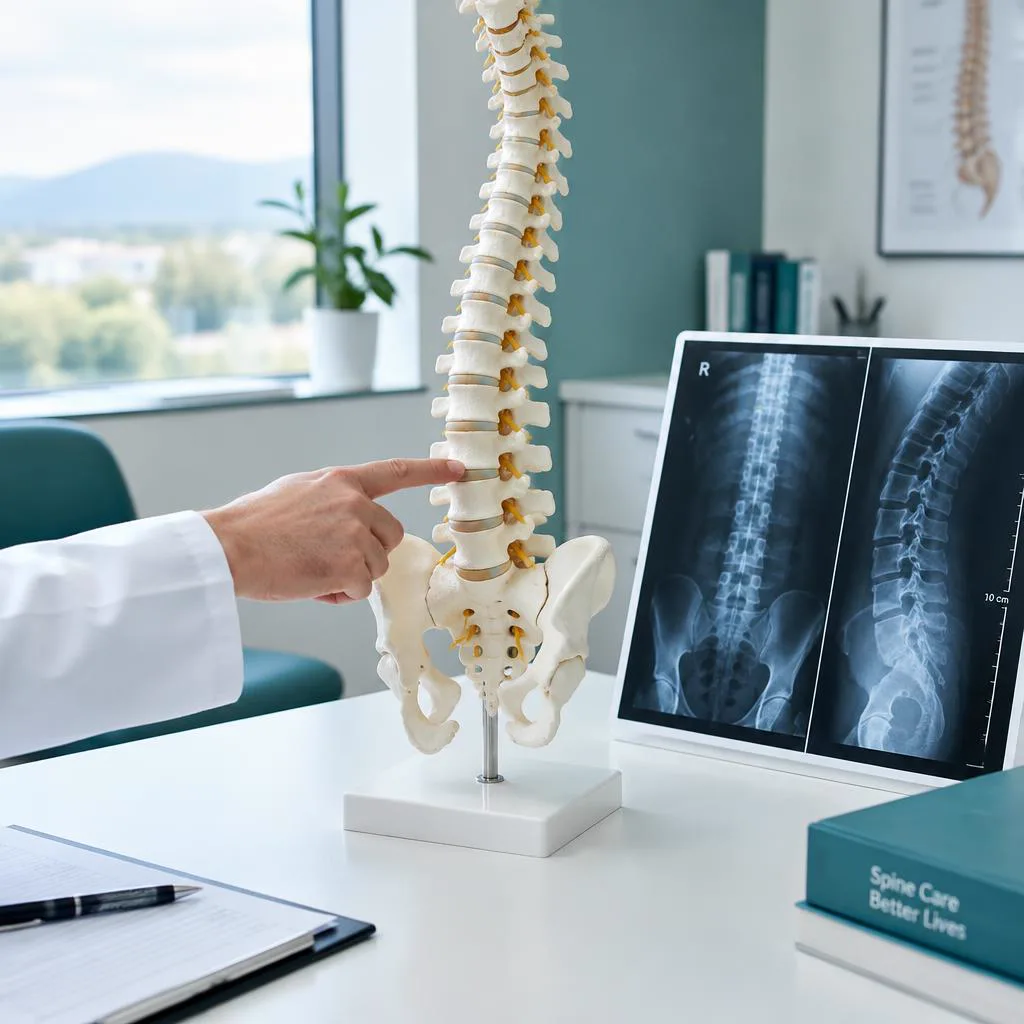
Your spine protects your spinal cord and the nerve roots that branch out to power your legs. Over decades of wear, discs can lose height, facet joints can enlarge (hypertrophy), and ligaments can thicken. When this narrows the spinal canal, it creates spinal stenosis, literally squeezing the nerve roots like a kink in a garden hose.
In some patients, degenerative changes allow one vertebra to slip forward over the one below it (spondylolisthesis). This abnormal movement pinches nerves and causes neurogenic claudication: a heavy, cramping ache or numbness in both calves that forces you to sit down after walking just 50 to 100 meters.
Why Spine Surgery is Always the Last Option
At Leela Health Care, Dr. Prajwal's clinical rule is simple: we never rush a patient into spine surgery. Over 90% of back and neck conditions improve with structured core physical therapy, posture modifications, nerve-calming medications, and targeted nerve root blocks.
Surgery is reserved for clear, objective indications: progressive muscle weakness (such as a foot drop where you cannot lift your toes), structural bone instability confirmed on dynamic flexion-extension X-rays, or severe leg pain that makes daily life impossible despite months of conservative care.
Decompression vs. Fusion: What Happens During the Procedure
Spinal decompression (micro-laminectomy) uses high-magnification surgical loupes or a microscope to gently remove only the bone spurs and thickened ligaments pressing on the nerve roots, immediately unroofing the nerve without disturbing surrounding muscle.
When the spine is also mechanically unstable (such as in spondylolisthesis), decompression alone is not enough because the bones will keep shifting. In these cases, spinal fusion is performed. Specialized titanium screws and a supportive interbody cage with bone graft are placed between the vertebrae, permanently stabilizing the shifting segment.
What Life and Mobility Look Like After Fusion
Patients often worry that a spinal fusion will make their entire back permanently rigid. In reality, a single-level fusion (such as L4-L5 or L5-S1) causes almost no noticeable loss of flexibility because most bending occurs at the hip joints. Most patients actually feel more mobile after surgery because debilitating nerve pain is gone.
You are helped out of bed to stand and walk on the day after surgery wearing a light supportive lumbar corset. Within 6 to 8 weeks, most patients resume office work, driving, and comfortable daily walking.